June 09 2026 at 08:57AM
🌕 Artemis II — Around the Moon and Back What Project Managers Can Learn from NASA’s Bold Return to Deep Space
Best Practices / Lessons Learned
More than fifty years after humanity last traveled beyond low Earth orbit, NASA launched the historic Artemis II mission — a ten-day journey around the Moon and safely back to Earth. The path trajectory resembled that of an infinity symbol, semicircular around half of earth orbit to launch in an arc to where the moon — was projected to be, not where it was, at the moment.
For Project Management Professionals (PMPs), Artemis II represents far more than a space mission. It is a live demonstration of enterprise-scale program management, stakeholder coordination, risk mitigation, systems integration, and strategic leadership under extreme complexity. Let's dive into this further.
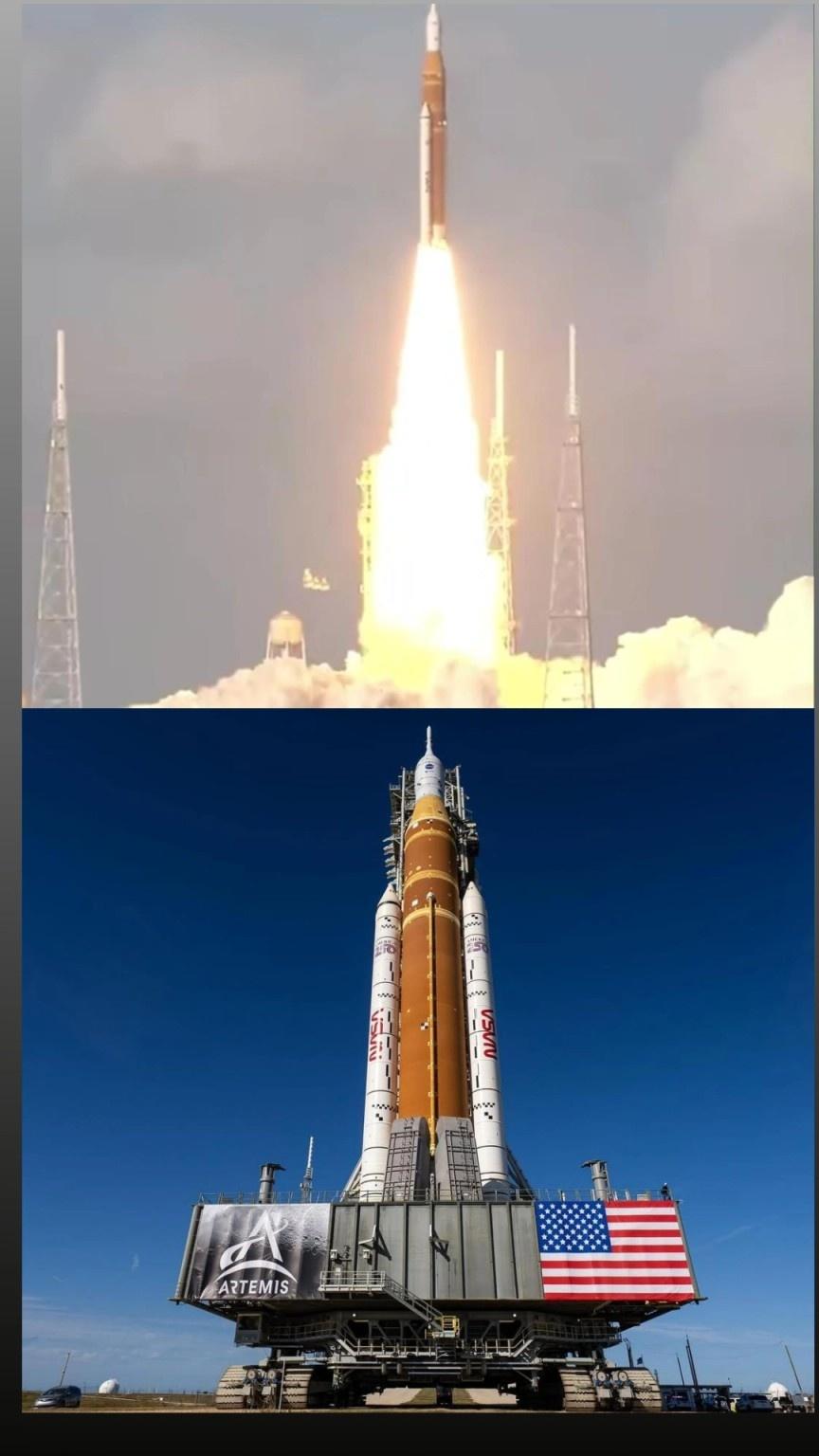
🚀 Mission Overview — The Next Giant Leap
Artemis II is NASA’s first crewed mission in the Artemis program and the first human lunar flyby mission since Apollo 17 in 1972. The mission carried four astronauts aboard the Orion spacecraft using the powerful Space Launch System (SLS) rocket. Its primary objective was to validate life-support systems, navigation, communications, and deep-space operational readiness before future lunar landing missions. The photos taken of the moon's surface are breath taking. Glover (pilot) states something simple but mind bending when he mentions seeing the earth setting behind the moon and how the blue outline of the earth in the crescent shape that, from our perspective of the moon, we tend to see this in the opposite stance while observing the moon from earth.
👨👨🏻🔬👩🚀👨🏿✈️🚀 The Artemis II Crew
Reid Wiseman — Commander
Victor Glover — Pilot
Christina Koch — Mission Specialist
Jeremy Hansen — Mission Specialist
Together, the crew traveled farther from Earth than any humans had in more than half a century, reinforcing international collaboration between NASA and the Canadian Space Agency. I want readers to try an imagine the challenge of being in a confined space with your coworkers or family for 10 days straight. When thinking of this feat, I marvel at what these astronauts were able to accomplish by banding together to keep mindsets focused on the North Star.
🛰️ Systems Integration at a Massive Scale
For PMPs
Artemis II is a masterclass in integrated program delivery.
NASA coordinated:
Rocket manufacturing
Spacecraft engineering
Ground systems operations
Deep-space communications
International partnerships
Human safety protocols
Launch logistics
Data and telemetry systems
The Orion spacecraft alone required thousands of engineers, suppliers, and subsystem integrations. The mission relied heavily on NASA’s Near Space Network and Deep Space Network to maintain communications across hundreds of thousands of miles.
This reflects a core PMP principle:
Large-scale projects succeed when integration management is treated as a continuous discipline, not a final phase. We must be able to make this into our communication management plans in order to achieve organizational success.
In Artemis II, every subsystem was interconnected. A delay in propulsion affects navigation. Navigation impacts communications. Communications influence mission safety. This is enterprise dependency management at its highest level. Documentation from the success of this mission will fuel our next journey as we will discuss further below.
Are your communication plans updated as the mission hits it's milestones?
Are the essential communication leads also delegating to the team ? If not, what risks are your projects being exposed to?
📊 Risk Management Beyond Earth Orbit
Project managers often discuss “high-risk environments,” but Artemis II literally operated in one.
NASA had to manage:
Extreme thermal conditions during reentry
Crew survivability
Deep-space communication latency
Propulsion redundancies
Radiation exposure
Hardware reliability
Emergency abort scenarios
During Earth reentry, Orion endured temperatures reaching approximately 5,000°F while protecting the crew inside. Splash down occurred with three circular parachutes in deep blue ocean. A feat that was tested several times with Blue Origin space crafts— on both land and ocean.
For PMPs, this highlights a major lesson:
⚠️ Risk management is not about eliminating risk — it is about designing resilience.
NASA performed years of simulations, unmanned testing through Artemis I, contingency planning, and phased validation before placing humans onboard Artemis II. That staged execution mirrors effective project governance frameworks used in pharmaceuticals, manufacturing, aerospace, and infrastructure megaprojects.
🧠 Lessons in Stakeholder Communication
One of the least discussed but most impressive aspects of Artemis II was stakeholder communication.
NASA successfully coordinated:
Federal agencies
International partners
Contractors
Engineers
Astronaut crews
Media organizations
Global audiences
The mission generated enormous public engagement, with nearly 350,000 visitors reportedly traveling to Florida’s Space Coast during launch activities.
For PMPs, this demonstrates:
Executive reporting discipline
Public communication strategy
Cross-functional alignment
Transparency under pressure
Strong communication management is often the difference between stakeholder confidence and stakeholder resistance. Data visualization with tools such as Smartsheet's and Jira tend to aid in your daily stand ups, so don't hesitate to prepare your screenshots of progress to steer your conversations.
🌍 Why Artemis II Matters for the Future
Artemis II is not the destination — it is the validation phase for long-term lunar operations and eventual missions to Mars. NASA describes Artemis as the foundation for sustainable human exploration beyond Earth orbit.
The mission’s success helps pave the way for:
Artemis III lunar landing missions
Lunar infrastructure development
Deep-space habitation systems
Scientific research platforms
International space collaboration
Mars mission preparation
For project leaders, Artemis II reinforces the importance of roadmap thinking: short-term execution aligned with long-term strategic vision.
📈 PMP Takeaways from Artemis II
✅ Incremental Validation Wins
NASA did not skip directly to lunar landings. Artemis I validated systems without crew. Artemis II validated human operations. Artemis III will attempt lunar surface return. Mature organizations scale through phased execution.
✅ Integration Management Is Everything
Cross-functional coordination determined mission success. PMPs managing enterprise programs face similar dependency chains every day.
✅ Risk Planning Must Be Operationalized
NASA embedded contingency planning into every mission layer. Risk registers only matter if mitigation strategies are executable.
✅ Stakeholder Alignment Drives Momentum
From astronauts to taxpayers, NASA maintained clear mission messaging and public engagement throughout the program lifecycle.
✅ Vision Inspires Teams
Projects become transformational when teams understand the “why.” Artemis is not merely about reaching the Moon — it is about preparing humanity’s next era of exploration.
🌕 Final Thoughts
Artemis II symbolizes more than technological achievement. It demonstrates what disciplined project management, systems engineering, and collaborative leadership can accomplish when aligned under a unified mission.
For PMPs, the mission serves as a reminder that the principles used to manage enterprise projects on Earth — scope, schedule, risk, communication, integration, and stakeholder management — are the very same principles enabling humanity to travel around the Moon and back.
And perhaps the biggest lesson of all:
The most ambitious projects in history begin with teams willing to execute one milestone at a time.
I encourage you to hear from the astronauts themselves on their unique experiences on the Kennedy Space Center Instagram. It makes me quite emotional to know we have fellow humans with the courage to achieve such feats to move mankind towards a brighter future.
Sources: