September 04 2026 at 10:11AM
Project Metempsychosis: How Failed Initiatives Reincarnate into Success
Turning Project Failure into Organizational Learning, Innovation, and Strategic Renewal
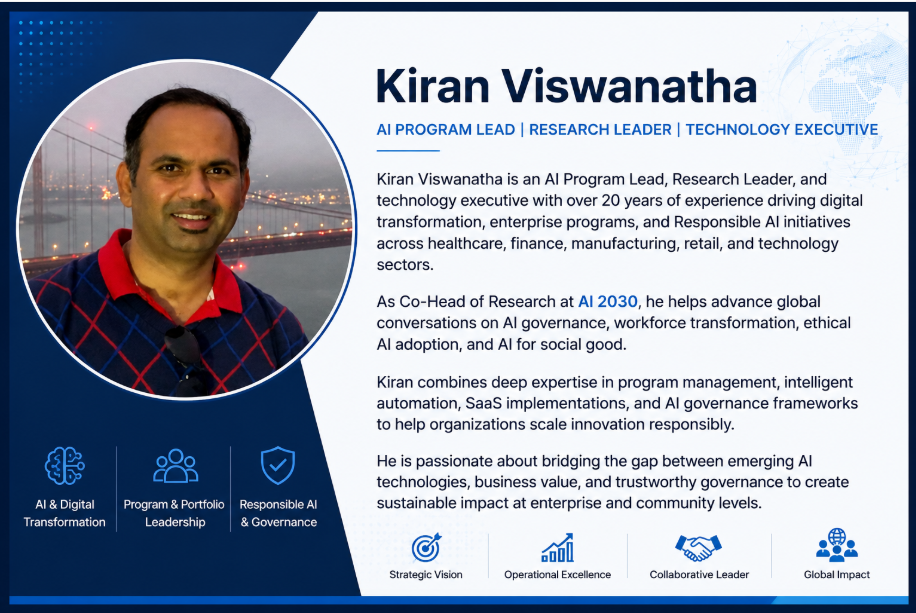
By Kiran Viswanatha
AI Program Leadership | Responsible AI | Research & Governance
“A failed project is not necessarily a failed investment. Sometimes, it is an unfinished lesson waiting for the right moment to become a success.”
Every project manager knows the feeling.
The business case looked compelling.
The team was assembled.
The roadmap was approved.
The budget was allocated.
The stakeholders were aligned.
And yet, somewhere along the journey, the initiative failed.
Perhaps adoption never materialized. Perhaps the technology wasn't ready. Perhaps the organization wasn't ready. Perhaps priorities changed. Or perhaps the team solved the wrong problem.
The natural organizational response is often:
Close the project. Archive the documents. Conduct a lessons-learned meeting. Move on.
But what if we looked at project failure differently?
What if a failed initiative could reincarnate?
That is the idea behind Project Metempsychosis.
Metempsychosis is an ancient philosophical concept describing the transmigration of the soul from one form into another. Applied metaphorically to project management, it provides a powerful way to think about organizational learning:
The project may die, but its knowledge, capabilities, relationships, data, intellectual property, and lessons do not have to die with it.
They can take another form.
And sometimes, that second life succeeds.
Did You Know?
Some of the most valuable innovations in business and technology emerged from initiatives that initially failed, were abandoned, or did not achieve their original objectives.
The important distinction is:
Failure is an outcome. Learning is an organizational capability.
A mature organization doesn't simply ask:
"Why did the project fail?"
It also asks:
"What survived the project, and where can that surviving value create impact next?"
That is the essence of Project Metempsychosis.
- Not Every Failed Project Is a Failure
Consider three scenarios.
Scenario A — Technology failure
A company invests in an AI solution, but the model isn't accurate enough for production.
The project fails.
But the organization has gained:
- cleaned datasets;
- AI infrastructure;
- engineering capabilities;
- governance processes;
- evaluation frameworks;
- lessons about data quality.
The original project failed.
The organizational capability did not.
Scenario B — Market failure
A product launches but customers don't adopt it.
The project is cancelled.
But the organization now understands:
- customer preferences;
- pricing sensitivity;
- usability problems;
- market timing;
- unmet needs.
The product failed.
The customer intelligence survived.
Scenario C — Timing failure
A transformation initiative is paused because the organization isn't ready.
Two years later:
- technology has matured;
- regulations have changed;
- employees have developed new skills;
- the business case has improved.
The project that once failed may now be viable.
Same idea. Different organizational context.
- The Metempsychosis Model
We can think about failed initiatives as moving through seven stages:
Project Birth
↓
Execution
↓
Failure / Closure
↓
Reflection
↓
Knowledge Extraction
↓
Recontextualization
↓
Reincarnation
The critical stage is recontextualization.
Because simply repeating the same project is not reincarnation.
It is repetition.
Reincarnation means changing the form.
- Failure vs. Reincarnation
|
Traditional Failure Response |
Metempsychosis Approach |
|
Close the project |
Close the initiative but preserve learning |
|
Archive documents |
Extract reusable knowledge |
|
Conduct lessons learned |
Convert lessons into organizational assets |
|
Blame execution |
Examine systemic causes |
|
Abandon technology |
Reassess technology maturity |
|
Disband team |
Preserve critical capabilities |
|
Write off investment |
Identify residual value |
|
Move to next project |
Identify where learning can be reused |
The project manager's role therefore changes from project closure manager to organizational learning catalyst.
- The Most Important Question After Failure
Instead of asking only:
"What went wrong?"
Ask five questions:
- What did we learn?
- What did we build?
- What relationships did we create?
- What assumptions were disproved?
- Where could these assets create value next?
The fifth question is where reincarnation begins.
- Real-World Example: The Technology That Was Too Early
Imagine an organization launches a virtual collaboration platform in an era when employees primarily work from offices.
Adoption is poor.
Leadership concludes:
"The initiative failed."
Then circumstances change.
A major shift toward distributed work occurs.
Suddenly, the organization already possesses:
- collaboration expertise;
- technology infrastructure;
- security controls;
- user research;
- implementation knowledge.
The initiative can return in a different form.
The original project wasn't necessarily useless.
It may simply have arrived before its ecosystem was ready.
This is an important lesson for project managers:
Timing risk is different from execution risk.
- Real-World Example: Post-It Notes
One of the most frequently cited innovation stories is the development of Post-it Notes at 3M.
An adhesive technology developed by Spencer Silver was initially not viewed as a successful commercial product because it did not behave like a conventional strong adhesive.
But the underlying capability eventually found a different application.
The lesson isn't that every failed experiment becomes a billion-dollar product.
It is more subtle:
A technology can fail against its original definition of success while succeeding under a different definition of value.
That is exactly the mindset project leaders can apply to failed initiatives.
- Real-World Example: Nintendo
Nintendo's history also illustrates the importance of organizational reinvention.
The company did not begin as a video-game company. Its earlier business activities were very different from its modern identity.
The broader lesson for project professionals is powerful:
Organizations can carry capabilities, experimentation, customer knowledge, and brand equity from one business model into an entirely different one.
Project Metempsychosis applies the same concept at the initiative level.
A failed project doesn't necessarily determine the future form of the capability it created.
- Failure Can Create Strategic Assets
A cancelled initiative may leave behind valuable assets.
Technology
- APIs
- platforms
- prototypes
- architecture
- automation
Data
- datasets
- research
- customer insights
- analytics
People
- domain expertise
- technical skills
- leadership experience
Process
- workflows
- governance
- operating models
Knowledge
- assumptions tested
- lessons learned
- market intelligence
- failure patterns
Relationships
- vendors
- partners
- customers
- internal stakeholders
The project may have delivered zero original benefits while still producing several reusable assets.
That is why project closure should not mean knowledge destruction.
- The Project Manager as "Capability Architect"
Traditional project management often emphasizes:
Scope → Schedule → Cost → Quality → Risk
Project Metempsychosis adds another dimension:
Capability preservation.
A project manager should know:
What organizational capabilities are being created during this project?
That could include:
- cloud expertise;
- AI literacy;
- data governance;
- change management;
- vendor relationships;
- automation capabilities;
- product discovery skills.
Those capabilities can survive the project.
- The AI Era Makes This Even More Important
AI projects can fail for reasons that have little to do with the technology itself.
For example:
- poor data;
- unclear use case;
- inadequate governance;
- low employee adoption;
- privacy concerns;
- insufficient change management;
- unrealistic expectations.
Suppose an organization's first generative AI pilot fails.
Should the company conclude:
"AI doesn't work for us."
Not necessarily.
The organization may have learned:
- which workflows aren't suitable;
- where human oversight is required;
- what data needs improvement;
- which employees need training;
- which vendors aren't appropriate;
- which governance controls are missing.
The failed pilot can become the foundation for the next, better AI initiative.
- Project Failure Can Become a Governance Asset
This is particularly important for Responsible AI.
Imagine an AI project discovers during testing that the training data produces unacceptable bias.
Stopping deployment is not necessarily failure.
It may be responsible project governance working correctly.
The organization has now learned:
- how bias manifests;
- what data quality problems exist;
- which controls are needed;
- where human oversight should occur;
- how model evaluation should change.
In this situation:
Stopping the project may protect the organization while creating governance maturity.
That is a very different definition of project success.
- The "Failure DNA" of a Project
Every major project contains information about what the organization tried, believed, misunderstood, and discovered.
We can think of this as Failure DNA.
It includes:
Assumptions
+
Experiments
+
Decisions
+
Dependencies
+
Risks
+
User Feedback
+
Technical Discoveries
+
Lessons Learned
↓
FAILURE DNA
↓
New Initiative
↓
Better Decisions
A mature PMO should preserve this DNA.
Otherwise, organizations repeatedly make the same mistakes.
- The PMO's Role in Project Metempsychosis
This is where the concept connects directly with the modern PMO.
A traditional PMO may ask:
"Why was the project closed?"
A transformation-oriented PMO asks:
"What organizational value remains?"
It can establish a Project Reincarnation Repository containing:
- reusable assets;
- lessons learned;
- failed assumptions;
- reusable technology;
- skills developed;
- vendor evaluations;
- customer research;
- risk patterns;
- governance lessons.
This repository becomes an organizational memory system.
- A Project Reincarnation Framework
I propose a simple RENEW framework.
R — Recognize
Acknowledge the failure without assigning unnecessary blame.
E — Extract
Capture knowledge, assets, capabilities and relationships.
N — Navigate
Identify where those assets might create value elsewhere.
E — Experiment
Test the new application with a small, controlled initiative.
W — Weave
Integrate the successful capability into the organization's operating model.
So:
Recognize → Extract → Navigate → Experiment → Weave
That's how failure becomes transformation.
- When Should a Project Be Reincarnated?
Not every failed project deserves a second life.
A PMO should evaluate:
Strategic relevance
Is the original problem still important?
Technology maturity
Has the technology changed?
Market timing
Has the market become more receptive?
Organizational readiness
Are capabilities now stronger?
Economics
Has the cost-benefit equation changed?
Customer need
Does the underlying customer problem still exist?
Risk
Can the previous failure modes now be controlled?
If most answers are yes, reincarnation may be worth exploring.
- The Reincarnation Decision Matrix
|
Condition |
Recommendation |
|
Problem disappeared |
Retire |
|
Technology obsolete |
Retire / transform |
|
Strategy changed |
Recontextualize |
|
Technology matured |
Reassess |
|
Customer need remains |
Re-experiment |
|
Capability remains valuable |
Reuse |
|
Risks now controllable |
Pilot |
|
Business case improved |
Reincarnate |
- Don't Confuse Reincarnation With Sunk-Cost Fallacy
This distinction is critical.
Project Metempsychosis does not mean:
"We spent $10 million, so let's spend another $10 million."
That is sunk-cost thinking.
Instead:
"What valuable assets survived, and is there a new evidence-based reason to invest?"
The decision must be based on future value, not emotional attachment to past investment.
- The Emotional Side of Project Failure
Project managers should also recognize the human dimension.
A failed project can affect:
- team confidence;
- leadership credibility;
- morale;
- career perceptions;
- stakeholder trust.
A blame-oriented culture creates an undesirable outcome:
People hide failure.
And hidden failure is far more dangerous than visible failure.
A learning-oriented culture instead encourages:
"Tell us what happened so the organization can become smarter."
Psychological safety therefore becomes part of project governance.
- From Lessons Learned to Lessons Applied
Many organizations have hundreds of lessons-learned documents.
The problem?
Few lessons actually change future behavior.
There is a difference between:
Lessons Learned
"We should engage stakeholders earlier."
and:
Lessons Applied
"All future transformation projects above $5M require stakeholder readiness assessment before funding approval."
The second converts learning into governance.
That's reincarnation.
A lesson becomes a capability.
- What Project Managers Can Do
After a project closes unsuccessfully, don't immediately close the intellectual account.
Conduct a Reincarnation Workshop.
Ask:
What should die?
- outdated assumptions;
- failed architecture;
- ineffective processes;
- unnecessary scope.
What should survive?
- knowledge;
- relationships;
- useful technology;
- data;
- capabilities.
What should transform?
- business model;
- use case;
- architecture;
- delivery model;
- governance approach.
What should be tested next?
- new customer segment;
- new technology;
- new operating model;
- new business case.
- A Practical Example for Chapter Members
Imagine a digital transformation project that was intended to automate 100 manual processes.
After 12 months:
- only 20 processes were automated;
- adoption was low;
- the project was cancelled.
A traditional closure might conclude:
Project unsuccessful.
A metempsychosis review might discover:
- 20 processes successfully automated;
- a reusable automation framework;
- a trained automation team;
- integration capabilities;
- process maps for 100 workflows;
- lessons about change resistance.
The organization then launches a smaller initiative focused on the five highest-value processes.
The second initiative succeeds.
Did the first project fail?
Yes.
Did the investment have zero value?
No.
Did the organization learn how to succeed?
Absolutely.
- What This Means for PMO Leaders
The future PMO should track not only:
Project Status
but also:
Project Afterlife
For every closed initiative, ask:
- What capabilities survived?
- What intellectual property survived?
- What data survived?
- What relationships survived?
- What lessons should influence future governance?
- What assets can be reused?
- What ideas deserve another experiment?
This creates an organizational learning flywheel.
- The Organizational Learning Flywheel
PROJECT
↓
Experiment
↓
Result
↓
Failure / Success
↓
Learning
↓
Capability Created
↓
New Opportunity
↓
New Experiment
↓
New Value
↺
The goal isn't to eliminate failure.
The goal is to make organizational failure productive.
- A New Project Success Equation
Traditional thinking:
Project Success = Scope + Schedule + Cost + Quality
Modern thinking:
Project Success = Delivery + Adoption + Benefits + Learning + Capability
And for innovation:
Innovation Value = Outcome + Learning + Reusable Capability
This doesn't excuse poor execution.
It recognizes that experimentation produces information—even when the original business case doesn't survive.
- The Ultimate Question for Project Managers
When a project fails, don't ask only:
"How do we prevent this from happening again?"
Ask:
"What did this project teach us that we couldn't have learned any other way?"
Then ask the more important question:
"How will we use that knowledge?"
Because knowledge that remains trapped inside a project closure document is not organizational learning.
Learning becomes valuable only when it changes the next decision.
Conclusion: Let the Project Die—But Don't Let the Learning Die With It
Every organization has projects that didn't work.
Some failed because the technology wasn't ready.
Some because the market wasn't ready.
Some because the organization wasn't ready.
Some because the original problem wasn't important enough.
And some simply because the team made the wrong assumptions.
But failure doesn't have to be the end of the story.
Project Metempsychosis offers another perspective.
Let the original initiative end.
Extract its knowledge.
Preserve its capabilities.
Challenge its assumptions.
Reassess its context.
Test a new form.
And, when the evidence supports it, give the idea another life.
The best organizations don't simply learn from failure. They know how to reincarnate what failure taught them.
For project managers, this creates a powerful shift:
Don't just close projects.
Harvest them.
Don't just document lessons.
Operationalize them.
Don't just measure what was delivered.
Understand what survived.
Because sometimes the project that failed yesterday contains the capability that will make tomorrow's project succeed.
That is Project Metempsychosis.
A "Did You Know?" takeaway for chapter members
💡 Did you know?
A project can fail to achieve its original objective while still creating valuable technology, knowledge, capabilities, relationships, data, and lessons. The strategic role of the modern PMO is not merely to record those lessons—but to identify where they can create value again.
Project closure may be the end of the initiative. It doesn't have to be the end of the idea.
One final question for your PMO
When your next project fails, will your organization write an obituary—or create an afterlife?